Best Time to Visit Koh Samui: When Is the Best Season for Couples?

Updated: 11 minutes ago

If you had to choose just one time of year to visit Koh Samui, February would be a perfect choice, with clear blue skies, warm sunshine and the lowest rainfall of the year. More broadly, January to March brings some of the island's most pleasant weather, with comfortable temperatures of around 26–33°C, calmer seas and generally drier days. It is a wonderful time for couples to wander along the beach, explore the island's natural beauty or simply enjoy slow days beneath the tropical sun.
Below is a guide to choosing the best time to visit Koh Samui based on the weather, crowd levels and the kind of experience you would like to enjoy together.
1. When Is the Best Time to Visit Koh Samui?
Rather than looking at every month separately, Koh Samui's weather is easier to understand when the year is divided into four periods. January to March generally offers the most settled conditions for outdoor holidays; April to June becomes hotter with more frequent showers; July to September remains warm but more changeable; while October to December brings the wetter end-of-year period before conditions gradually begin to improve again.
Period | Main Characteristics | Best For |
January–March | Drier weather, with February seeing the least rain | Beaches, island hopping, outdoor exploration |
April–June | Hotter weather with increasing showers | Songkran, pools, beaches, spa |
July–September | Warm, green and refreshed by occasional showers | Slow holidays, beaches, wellbeing |
October–December | Wetter in October–November, gradually improving in December | Wellness, resort stays, festive holidays |
Tropical weather can always vary from one year to another, so this table is best used as a guide for planning your trip rather than a fixed weather calendar.
2. Which Season Suits the Way You Want to Experience Koh Samui?
2.1 January–March: Blue Seas and Some of the Year's Best Sunshine
The beginning of the year shows Koh Samui at its brightest. February stands out for having the lowest average rainfall of the year, while January and March remain warm and comfortable enough to spend much of the day outdoors.
This is the perfect time to set off by boat to Mu Ko Ang Thong, spend an entire afternoon at Maenam Beach or simply find a hillside viewpoint and watch the ocean stretch towards the horizon. With such favourable weather, visitor numbers are usually higher too, particularly around the early-year holiday periods.
Weather: Warm and generally drier; February has the least rain
Vibe: Beach, adventure & romance
Crowds: High
Great for: Ang Thong Marine Park, beach days, sightseeing, sunset cruises
2.2 April–June: Tropical Sunshine, Songkran and a Slower Rhythm
From April onwards, Koh Samui begins to feel noticeably hotter, with May often falling within the warmest period of the year. Showers become more frequent through May and June, but the weather still carries all the warmth of a tropical island escape.
The highlight of April is Songkran, Thailand's traditional New Year celebration, held in the middle of the month with lively water festivities across the country. A day in Koh Samui at this time might begin beside the beach, continue with a few lazy hours in the pool and end gently at Jai Spa as the afternoon heat begins to soften.
Weather: Hotter, with showers becoming more frequent later in the period
Vibe: Beach, festive & relaxation
Crowds: High around Songkran, then gradually quieter
Great for: Beach days, pool time, spa, temple visits
Notable event: Songkran – Thailand's traditional New Year celebration in mid-April
2.3 July–September: A Greener, More Unhurried Koh Samui
July to September still carries Koh Samui's characteristic year-round warmth, although cloud cover and passing showers become more common than at the beginning of the year. Instead of filling every day with plans, this period suits couples who enjoy moving naturally between exploring and taking time to rest.
You might spend the morning by the beach, relax at the resort in the afternoon and visit Fisherman's Village once the lights come on. On days when staying in sounds more appealing, the 67 sqm Love Ocean View offers a private terrace designed for two, while the 73 sqm Samui Ocean View Suite provides separate bedroom and living areas for an even more comfortable stay.
Weather: Warm, cloudier and refreshed by intermittent showers
Vibe: Relaxation, beach & wellbeing
Crowds: Moderate
Great for: Maenam Beach, Fisherman's Village, spa, ocean-view stays
2.4 October–December: Green-Season Calm and Festive Escapes
October and November bring Koh Samui's most noticeable rainy period, with November recording the highest average rainfall of the year. By December, conditions begin to shift and generally become more settled towards the end of the month.
If your priority is spending long days out on the water, this may not be the most favourable period. For couples who would rather slow down with spa time, resort days or a deeper wellbeing journey, however, SAOL Wellness Retreat offers 3-, 5- and 7-day programmes combining movement, recovery and quiet moments surrounded by nature.
Towards the end of December, the festive atmosphere returns and visitor numbers rise as the Christmas and New Year holidays begin.
Weather: Wetter in October–November, gradually improving through December
Vibe: Wellbeing, slow travel & festive
Crowds: Low in October–November, rising sharply towards late December
Great for: Wellness retreats, spa, resort stays and flexible outdoor activities as conditions improve
3. Experiences Worth Trying During the Best Months in Koh Samui
If you visit Koh Samui during one of its more favourable weather periods, particularly from the beginning of the year through April, make time for a few of the island's signature experiences. There is no need to see everything. One day out on the water, an afternoon surrounded by nature and a few genuinely slow moments can be enough to create a beautifully balanced trip for two.
3.1 Explore Mu Ko Ang Thong National Marine Park
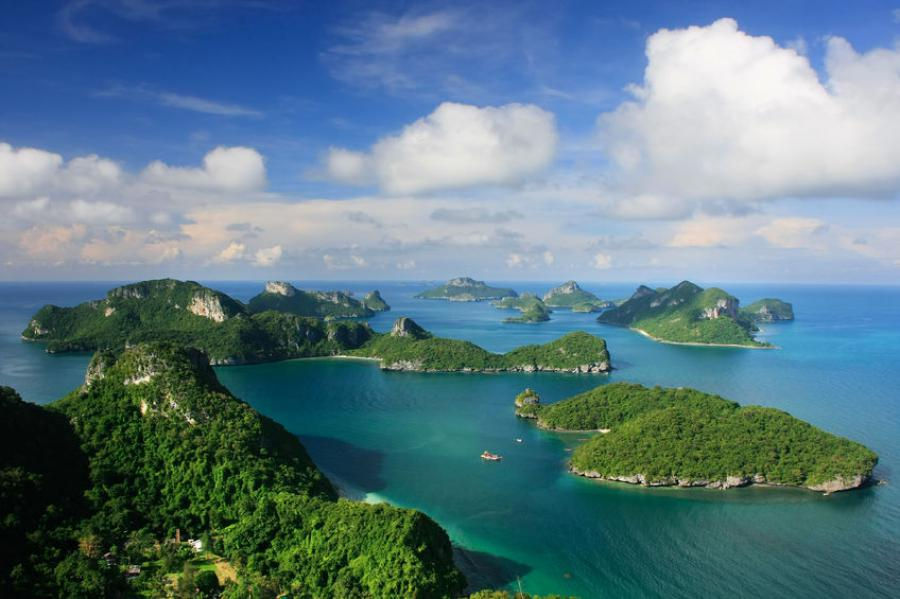
Set out in the Gulf of Thailand, Mu Ko Ang Thong offers a full day that feels completely different from the slower resort rhythm of Koh Samui. The archipelago is made up of 42 islands, where limestone cliffs rise dramatically from blue water and invite experiences such as kayaking, snorkelling and trekking to scenic viewpoints.
The weather at the beginning of the year is particularly well suited to spending a full day offshore. For couples who love nature, watching the islands slowly appear ahead as you leave Koh Samui can be every bit as memorable as reaching the viewpoints themselves.
Address: Ko Samui District, Surat Thani 84280, Thailand
Opening hours: 08:00–18:00
Time needed: Around 1 day
Entrance fee: THB 300 per foreign adult; THB 150 per foreign child
Note: The park usually closes seasonally from around 1 November to 15 December, depending on weather conditions.
3.2 Spend an Afternoon on Koh Samui's Beaches
Chaweng draws travellers with its lively energy, Lamai feels softer and more relaxed, while Maenam is particularly suited to afternoons with no real plan at all. Each beach has its own character, but all share long stretches of sand, blue water and an easy sense that there is no reason to rush.
Swim for a while, settle beneath the shade of a coconut palm, read a book or simply wait for the afternoon sunlight to soften across the sea. It is one of the easiest experiences to weave into almost any Koh Samui itinerary.
Locations: Chaweng Beach, Lamai Beach, Maenam Beach
Opening hours: No fixed hours for public beach areas
Time needed: Flexible, usually around 2–4 hours
Entrance fee: Free in public areas
3.3 Escape Into Nature at Na Muang Waterfalls
After a few days by the sea, Na Muang Waterfalls offers a refreshing change of scenery in Koh Samui's greener interior. Paths weave beneath tropical trees, water tumbles over rocky formations and cool natural pools make this a lovely place for a morning of gentle movement.
There is no need to rush the experience. An hour or two spent walking, taking in the scenery and enjoying the cooler atmosphere among the trees can be enough to shift the rhythm of the entire day.
Address: Na Mueang, Ko Samui District, Surat Thani 84140, Thailand
Opening hours: 09:00–18:00 daily
Time needed: Around 1–2 hours
Entrance fee: Free; some parking areas may charge a small fee
Note: Visit during daylight hours and wear shoes with good grip.
3.4 Visit Big Buddha and Wat Plai Laem in the Morning
A quiet morning in northern Koh Samui is a lovely time to explore Big Buddha and Wat Plai Laem. Big Buddha is instantly recognisable for its 12-metre golden Buddha statue, while nearby Wat Plai Laem creates a different atmosphere with its peaceful lake, striking 18-armed Guanyin and distinctive Thai-Chinese architectural details.
The two temples sit relatively close to one another, making them easy to visit during the same outing before returning to the beach or settling into a slower afternoon.
Location: Big Buddha and Wat Plai Laem, Bo Put, Koh Samui, Surat Thani 84320, Thailand
Indicative opening hours: Around 06:00–18:00
Time needed: Around 1.5–2 hours for both temples
Entrance fee: Free; voluntary donations are welcome
Note: Dress respectfully with shoulders and knees covered when entering temple areas.
3.5 Wander Through Fisherman's Village as Evening Falls
Fisherman's Village reveals another side of Koh Samui once its old shophouses, beachfront restaurants and small boutiques begin to glow after dark. Rather than visiting only for a quick photo, give yourselves the whole evening to wander slowly, find something you both feel like eating and let the day end naturally beside the sea.
If you visit on a Friday evening, Walking Street becomes livelier with food stalls, handicrafts and a festive atmosphere that continues well into the night.
Address: Bo Put, Amphoe Ko Samui, Surat Thani 84320, Thailand
Time needed: Around 2–3 hours
Friday Walking Street: Around 17:00–23:00
Entrance fee: Free
Vibe: Food, drinks & evening strolls
3.6 Let the Day Slow Down With Yoga, Spa and the Infinity Pool
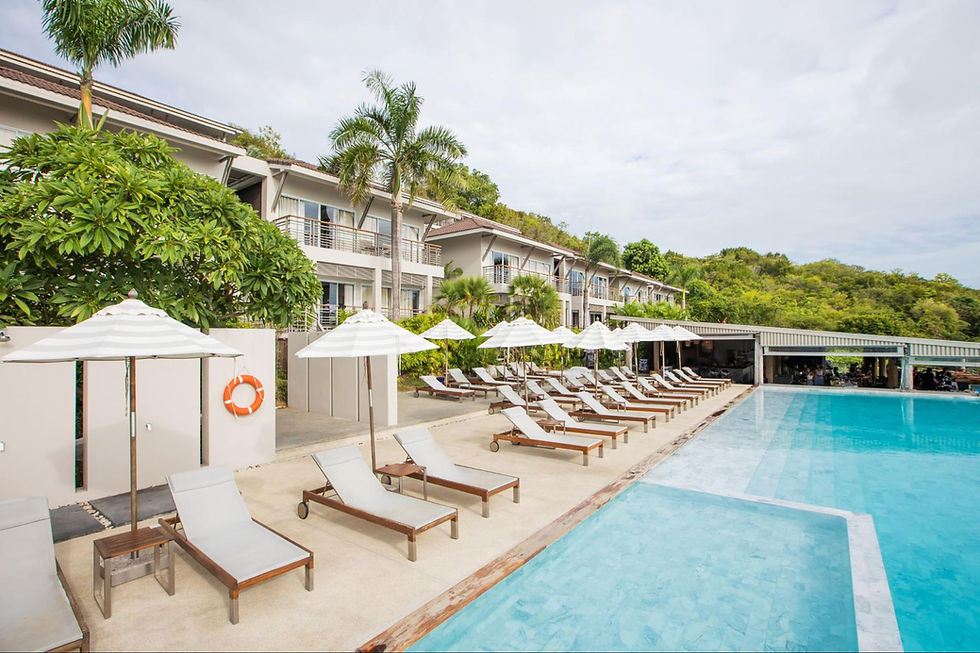
Even during Koh Samui's most beautiful months, your holiday does not need to be planned from morning to night. At Mantra Samui Resort, you can begin the day with Poolside Yoga or Pilates Circuit Training, then spend the rest of the morning by the infinity pool overlooking the coastline.
The resort also arranges a selection of on-site and island experiences according to its current activity schedule.
The afternoon can continue at an equally gentle pace at Jai Spa, with Thai massage, foot reflexology, facial treatments and experiences for two. It is an easy way to bring balance to a trip filled with beach days, trekking and island hopping.
Address: Mantra Samui Resort, 9/123-124 Moo 1, Tumbon Maenam, Aumphur Koh Samui, Surat Thani 84330, Thailand
Yoga/Pilates: According to the resort's current activity schedule
Jai Spa: 09:00–20:00 daily
Spa reservations: Advance booking required
Gym: Open 24/7
4. Mantra Samui Resort – Experience Koh Samui in Your Own Season
Mantra Samui Resort opens up a completely different rhythm of island life from the lush hillsides of Mae Nam. When Koh Samui is glowing beneath the sun, you can wake to sweeping ocean views, let the morning drift by beside the infinity pool, then spend the rest of the day discovering the beaches, temples and fishing villages below.
As an adults-only lifestyle and wellbeing resort, Mantra Samui creates a private setting for couples who prefer a gentler kind of escape, with spacious rooms and suites, panoramic ocean views, Jai Spa, SAOL Wellness and a range of movement experiences within the resort. It is also pet-friendly, so your island getaway does not necessarily have to mean leaving your four-legged companion behind.
5. Frequently Asked Questions About the Best Time to Visit Koh Samui
5.1 What is the best month to visit Koh Samui?
If stable weather is your priority, February is one of the best months to visit Koh Samui, as it has the lowest average rainfall and generally clearer skies. January and March are also excellent choices for beaches, sightseeing and island excursions.
5.2 Does Koh Samui have winter or snow?
Koh Samui does not experience cold winters or snow like destinations in temperate climates. Thailand does recognise a winter season meteorologically, but temperatures in Koh Samui remain warm throughout the year, usually around 26–33°C, with rainfall rather than snow as the island's main form of precipitation.
5.3 Is April a good time to visit Koh Samui?
Yes, particularly if you enjoy a festive atmosphere. April is hotter than the first few months of the year but remains well suited to beach days, pool time and sightseeing. It is also when Songkran, Thailand's famous traditional New Year celebration, takes place.
5.4 When does Koh Samui receive the most rain?
Rainfall becomes noticeably heavier around October and November, with long-term climate data showing November as the month with the highest average rainfall. If your priority is boat trips and outdoor activities, the earlier months of the year are generally a better choice.
5.5 Is Koh Samui worth visiting from July to September?
Yes. Koh Samui remains warm from July through September, although there is usually more cloud cover and passing rain than earlier in the year. This period works well for couples who enjoy a flexible itinerary, mixing beach time and shorter outings with spa afternoons, pool time and slower days at the resort.
5.6 How many days should you spend in Koh Samui?
Around 4–6 days gives you enough time to combine highlights such as Ang Thong, Fisherman's Village and the beaches with a few slower days of relaxation. If you are planning a wellness retreat or simply prefer slow travel, around a week gives you more room to enjoy the island at an easier pace.Meta Description: Learn how to get to Koh Samui by plane, ferry, train or bus from Bangkok, Phuket, Krabi, Chiang Mai, Surat Thani and nearby islands.


Comments