Koh Samui Temples & Culture: Big Buddha and Beyond

Updated: Oct 1

While Koh Samui is known worldwide for its beaches, island adventures and luxury resorts, the island’s temples reveal a deeper connection to Thai culture and local traditions.
Beyond the coastline, travellers can discover spiritual landmarks such as Wat Phra Yai (Big Buddha), home to a 12-metre golden Buddha statue built in 1972, and the colourful lakeside complex of Wat Plai Laem, where Thai, Chinese and Buddhist influences come together.
This guide explores the most memorable temples to visit in Koh Samui that goes beyond the iconic Big Buddha with practical information on what makes each temple special and how to visit respectfully.
Wat Phra Yai (Big Buddha): Koh Samui’s Most Iconic Temple
Standing on Ko Fan, a small islet connected to Koh Samui’s northeastern coast by a short causeway, Wat Phra Yai (Big Buddha) is one of the island’s most recognisable cultural landmarks. Its highlight is a 12-metre golden Buddha statue, built in 1972, which overlooks the surrounding coastline and has become one of the first sights many travellers associate with Koh Samui.
Beyond its impressive size, Wat Phra Yai remains an active Buddhist temple rather than simply a viewpoint or photo stop. Visitors can climb the naga-lined staircase to the upper platform, make offerings, observe local religious practices and enjoy views across Bang Rak Bay, Bophut Beach and the surrounding islands.
Opening hours: Daily, around 7:00 AM – 6:30 PM
Entrance fee: Free entry (donations welcome)
Highlights: Seeing the 12-metre golden Buddha statue, climbing the naga staircase, enjoying coastal views, experiencing a working Buddhist temple
Best time to visit: Early morning or late afternoon is recommended, when temperatures are cooler and the light is better for photography. A visit usually takes around 30–60 minutes, making it easy to combine with nearby attractions such as Wat Plai Laem and Bophut’s Fisherman’s Village.
Wat Plai Laem: Colourful Thai-Chinese Temple by the Lake

Located only a few minutes from Big Buddha, Wat Plai Laem offers a completely different temple experience. While Wat Phra Yai is known for its golden Buddha statue and elevated views, Wat Plai Laem is recognised for its colourful architecture, peaceful lake setting and blend of Thai and Chinese Buddhist influences.
The temple complex is best known for its large 18-arm Guanyin statue, the Goddess of Mercy, surrounded by water and decorative temple structures. Visitors can walk around the lake, observe the detailed artwork and experience a quieter atmosphere that makes it one of Koh Samui’s most photogenic cultural sites.
Location: Plai Laem Soi 7, Bo Put, Ko Samui District, Surat Thani
Opening hours: 11 AM–11:30 PM (Monday: closed)
Entrance fee: Free entry
Highlights: Seeing the 18-arm Guanyin statue, photographing colourful temple architecture, feeding fish in the lake, exploring Thai-Chinese Buddhist design
Best time to visit: Visit together with Big Buddha, as the two temples are located close to each other and can easily be included in the same half-day cultural route.
Wat Khunaram: Understanding Buddhist Beliefs
Through the Mummified Monk

Located in southern Koh Samui, Wat Khunaram offers a very different experience from the island’s more colourful and iconic temples. The temple is best known for housing the preserved body of Luang Pho Daeng, a respected monk whose remains have been displayed in a glass case in a meditation posture since his death in 1973.
While the mummified monk is what attracts many visitors, Wat Khunaram is not simply a place to see an unusual sight. It remains a working Buddhist temple where locals come to pray, make offerings and reflect on Buddhist teachings about mindfulness and the impermanence of life. The quiet atmosphere makes it one of Koh Samui’s most meaningful cultural stops.
Location: Wat Khunaram, Na Mueang, Ko Samui District, Surat Thani
Opening hours: 8:00 AM to 5:00 PM daily
Entrance fee: Free entry (donations welcome)
Highlights: Seeing Luang Pho Daeng’s preserved body, learning about Buddhist beliefs, observing local worship practices, exploring a peaceful temple setting
Best time to visit: Early morning or late afternoon offers a quieter atmosphere and more comfortable temperatures. Most travellers spend around 20–40 minutes here, making it easy to combine with nearby attractions such as Na Muang Waterfalls or other southern Koh Samui landmarks.
Laem Sor Pagoda: A Peaceful Coastal Temple

For travellers looking for a quieter temple experience away from the island’s main tourist routes, Laem Sor Pagoda offers a more peaceful coastal setting. Located at the southern tip of Koh Samui, this golden pagoda sits close to the sea, creating a unique combination of spiritual atmosphere and ocean scenery.
Unlike Big Buddha and Wat Plai Laem, which are often included in first-time visitor itineraries, Laem Sor Pagoda feels more secluded. The surrounding coastline, calm atmosphere and fewer crowds make it a good stop for travellers who want to slow down, take photos and experience a quieter side of the island.
Location: Thesaban Nakhon Ko Samui, Ko Samui District, Surat Thani
Opening hours: 7 AM–6 PM daily
Entrance fee: Free entry
Highlights: Photographing the golden pagoda, enjoying coastal views, visiting a quieter temple site, combining culture with a southern island drive
Best time to visit: Late afternoon is ideal, when the softer light enhances the golden structure and the nearby coastline. It works well as part of a southern Koh Samui route together with Wat Khunaram and other nearby attractions.
Temple Etiquette in Koh Samui: What to Know Before Visiting
Koh Samui’s temples welcome visitors, but they remain important places of worship for local communities. A few simple customs can make your visit more respectful, from dressing appropriately to understanding when to remove your shoes or lower your voice inside temple buildings.
Dress Respectfully
The most important rule when visiting temples in Koh Samui is to cover your shoulders and knees. While beachwear is suitable around the island’s coastline, visitors should avoid entering temples in swimwear, sleeveless tops or very short shorts. A lightweight scarf or sarong can be useful to keep in your bag if you plan to visit temples during a day of exploring.
Remove Shoes Before Entering Temple Buildings
Visitors are expected to remove their shoes before entering areas such as prayer halls or buildings housing Buddha images. Look for shoe racks near entrances and follow what locals are doing if you are unsure. Slip-on shoes are often the most convenient option when visiting several temples in one day.
Be Mindful Around Buddha Images and Monks
Temples are peaceful spaces where locals come to pray and meditate. Keep your voice low, avoid climbing on religious structures for photos and do not point your feet towards Buddha images. When photographing monks or ceremonies, be discreet and avoid interrupting religious activities.
Where to Stay for Exploring Koh Samui Temples

Located in northern Koh Samui, Mantra Samui is within easy reach of the island’s most famous temples. Big Buddha and Wat Plai Laem can be reached in around 10-15 minutes by car, while cultural sites further south, such as Wat Khunaram and Laem Sor Pagoda, are around 25-35 minutes away, making it possible to enjoy a half-day temple route before returning to the resort.
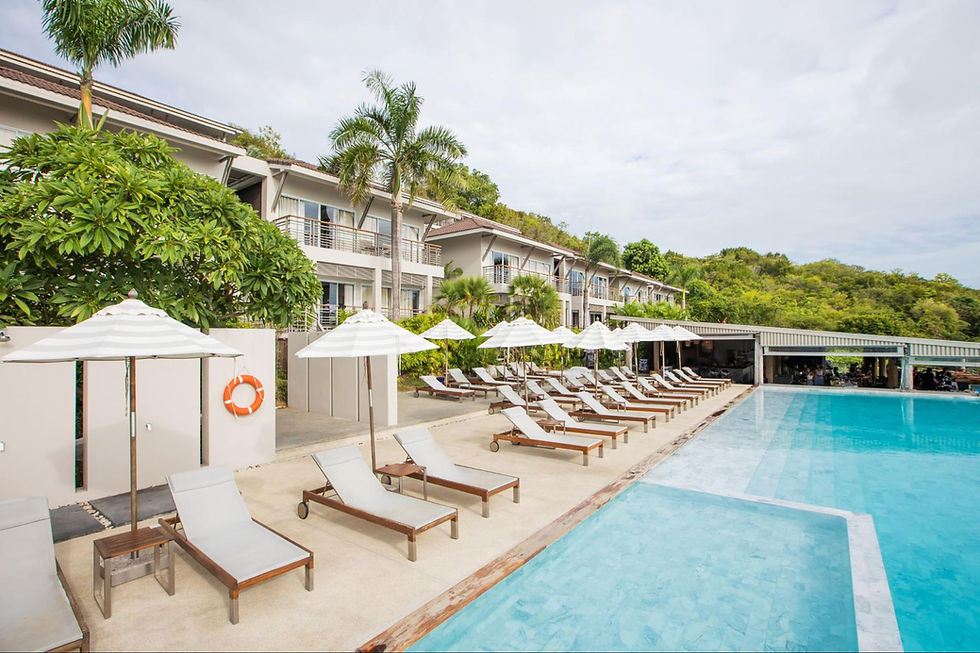
Set on a hillside in Mae Nam, Mantra Samui Resort offers an adults-only wellness retreat with panoramic views over the island’s coastline, creating a private base for travellers who want to discover Koh Samui’s cultural landmarks while enjoying a quieter island stay.
After exploring Koh Samui’s cultural landmarks, guests can return to a private hillside retreat with Jai Spa, SAOL Wellness Retreat and ocean-view dining at The View Kitchen + Bar, creating a balance between island discovery and moments of relaxation.
Frequently Asked Questions About Koh Samui Temples
Can I visit Big Buddha and Wat Plai Laem on the same trip?
Yes. Wat Phra Yai (Big Buddha) and Wat Plai Laem are the easiest temples to combine because they are located in northeastern Koh Samui, only around 1 km apart. Most travellers visit both in the same half-day route, allowing time to see the golden Buddha statue, explore the lakeside temple complex and enjoy the surrounding coastal area.
How many temples can I visit in one day in Koh Samui?
A half-day temple route is enough to visit the island’s main highlights, especially Big Buddha and Wat Plai Laem. Travellers with a full day can add Wat Khunaram and Laem Sor Pagoda to explore more of Koh Samui’s cultural side, although travelling between
northern and southern temples requires more driving time.
Do I need to join a tour to visit Koh Samui temples?
No, you don’t need to. Most of Koh Samui’s major temples can be visited independently by taxi, private car or scooter. The northern temple route is particularly easy to arrange because Big Buddha and Wat Plai Laem are close together, while joining a tour can be more convenient if you want to combine several temples across the island in one day.
Are there entrance fees for temples in Koh Samui?
Most temples in Koh Samui are free to enter, including Big Buddha and Wat Plai Laem. Visitors may find donation boxes at temples, and small contributions are welcomed but not required.
Can I visit Koh Samui temples in beach clothes?
No. Although Koh Samui is a beach destination, temples require more respectful clothing. Visitors should cover their shoulders and knees, and shoes should be removed before entering certain temple buildings. Bringing a light scarf or sarong is useful if you are exploring temples during a beach day.


Comments